
Seguin Previous Residents by Era
Seguin address history is split between current appraisal data, recorded land indexes, archival deed volumes, and household sources. Start with the time period in question. A current property record can establish the parcel identifier, while a newspaper or released census may be more useful for people who lived at the address. The table keeps the lines of evidence separate so a search for previous residents does not confuse an owner with every person who occupied a property.
| Source | Years | Where Held | What It Shows |
|---|---|---|---|
| GAD appraisal record | Current portal; oldest online year not stated | Guadalupe Appraisal District | Assessed owner, mailing and situs addresses, value, exemptions, parcel and legal identifiers. |
| ROAM land index | 1970-present | Guadalupe County Clerk | Current grantor, grantee, instrument, image-access, and document-chain leads. |
| Historic land index | 1832-1970 | Kofile QuickLink, clerk, and TSLAC backups | Historic direct and reverse grantor-grantee index books. |
| Deeds and tax rolls | Deeds 1846-1902; tax rolls 1846-1910 | TSLAC microfilm and county sources | Legal transfers, taxpayer presence, tenure, and departure clues. |
| Newspapers and federal census | Newspapers 1858-current in uneven runs; census 1850-1950 | Seguin Public Library and national or licensed resources | Dated household, death, move, community, and address context. |
Choose an ownership source first when the goal is a deed chain. Choose the newspaper and census route when the goal is who lived here before.
Note: Mailing address data may belong to a lender, agent, PO box, or another property and is not proof of occupancy.
Start With Seguin Parcel Details
The Guadalupe Appraisal District property search is the current starting point for an address trail. It allows owner, address, ID, advanced, and ARB searches. Save the situs address, mailing address, Property ID, Geographic ID, subdivision or neighborhood, tax year, legal description, and map connection. The legal description is the lasting property identifier when a street name changes, a subdivision is replatted, or a modern number does not match an older record.
GAD's help says a difficult address search can be simplified to the street name, and a difficult owner search can begin with only a first or last name. Its results are tax and appraisal records, not a record of every past resident. A homestead exemption may support an owner-occupancy inference for a particular tax year, but it cannot identify other people in the household.
Seguin Deed Search Split
Guadalupe County's online land access has a clear time division. ROAM covers current recorded material from 1970 forward, while the Kofile QuickLink historic index covers index books from 1832 through 1970. The two sources meet at 1970, but a backward search can still require the clerk counter, TSLAC film, or an original deed volume for a complete record.
The County Clerk is the custodian. ROAM's subscription information describes unofficial free access and paid images or subscription options; the county also cautions that the online database is not the official repository and does not provide title opinions. Record instrument dates and legal descriptions at every handoff. Do not assume a matching surname identifies the same parcel.
The historic index interface provides type, year, party, last-name, and first-name controls for the older books.
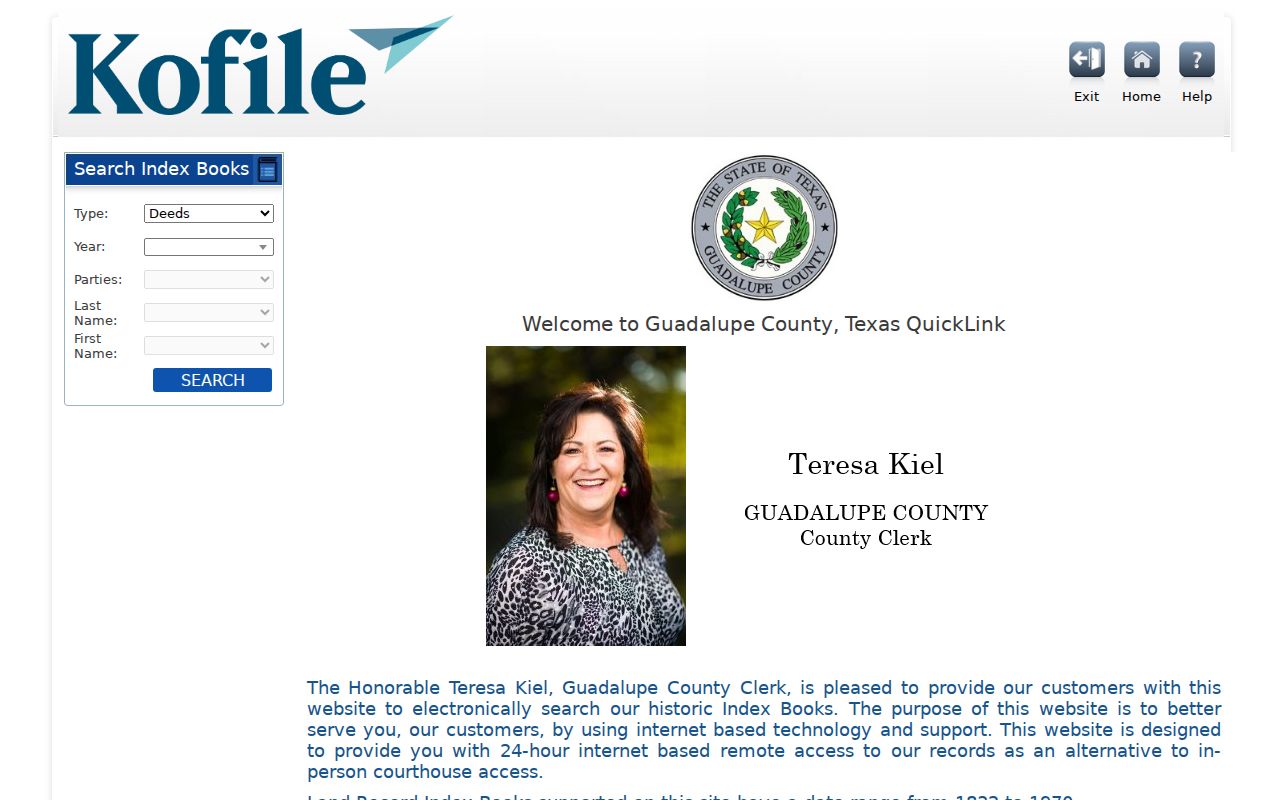
Use both the direct and reverse entries when moving through older ownership, and compare each result with the parcel's legal description.
Reversing a Guadalupe Title Chain
A chain of title is the sequence of recorded property transfers. For Seguin previous residents research, it identifies recorded interests rather than proving who occupied the house. Work from today's owner to the deed in which that owner bought the property. The seller in that deed becomes the next name to search as a grantee, because the seller may have acquired the same property in an earlier document. Confirm the legal description at every step before treating the chain as continuous.
- Find the current parcel in GAD and write down the legal description and property identifiers.
- Search the current owner's purchase in ROAM and capture the instrument number, date, seller, and legal description.
- Search that seller as a grantee to locate the earlier acquisition of the same legal description.
- Repeat the seller-to-earlier-grantee step until the search reaches the 1970 online division.
- Continue in the historic index, clerk records, or TSLAC deed volumes, checking direct and reverse entries rather than relying on one name list.
- Grantor
- The party giving or transferring an interest in a recorded instrument.
- Grantee
- The party receiving that interest. A prior seller can often be found as a grantee in an earlier purchase.
- Chain of title
- The linked sequence of transfers for the same property, verified with the legal description rather than a street address alone.
- Legal description
- The lot, block, subdivision, survey, or metes-and-bounds wording that identifies land in recorded documents.
The ROAM record search is the current branch of that sequence.
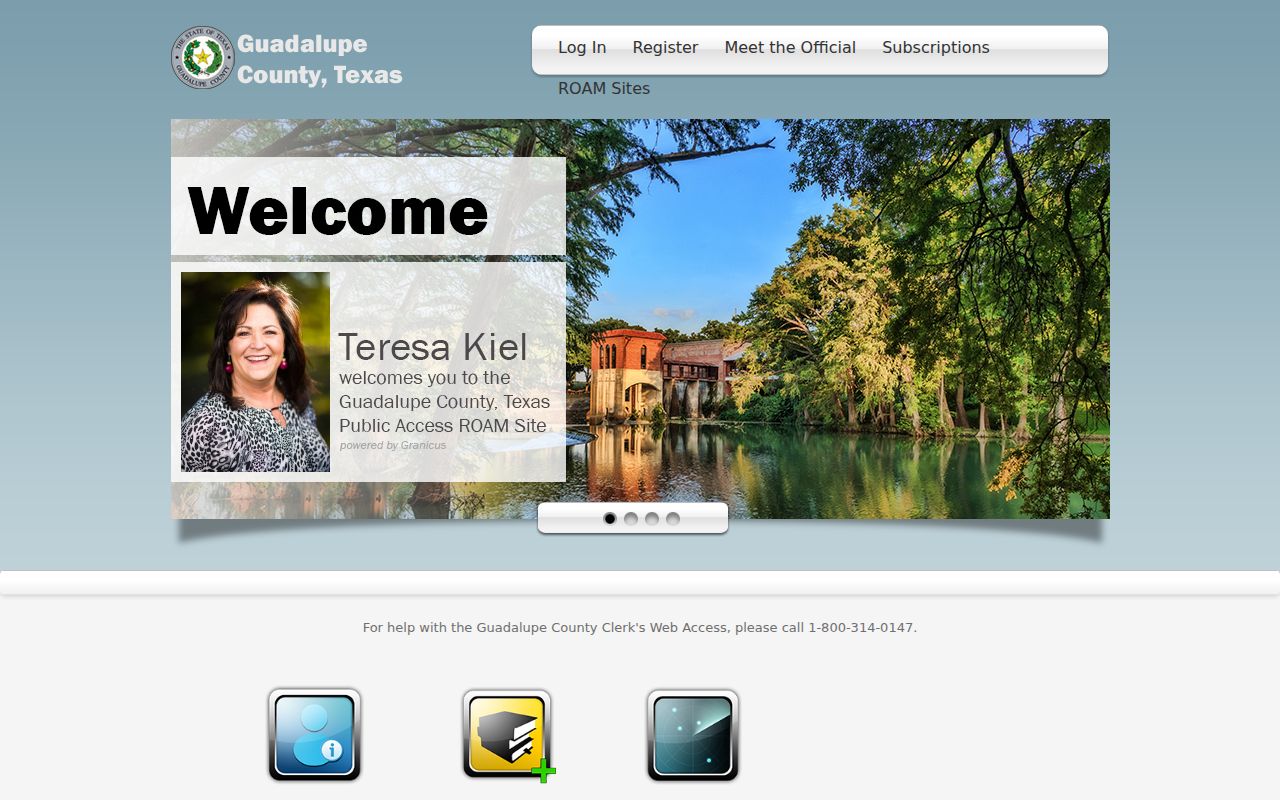
ROAM can supply the later instrument link, but the older branch still needs the historic index or archival records.
Seguin Tax Rolls as Arrival Clues
Tax rolls are useful for a narrower question: when did a taxpayer begin or stop appearing with a property interest? TSLAC lists Guadalupe County tax rolls for 1846 through 1910, including reels 109401 through 109403, with a partly digitized FamilySearch collection. They can suggest arrival, tenure, or departure, but they do not establish family relationships. Pair a tax entry with the deed legal description and contemporary newspaper evidence before connecting it to a household.
The TSLAC Guadalupe County holdings guide also lists deed volumes, probate, marriage, naturalization, survey, and scholastic census material. It is the documented fallback when a web index ends or a record needs reel-level context.
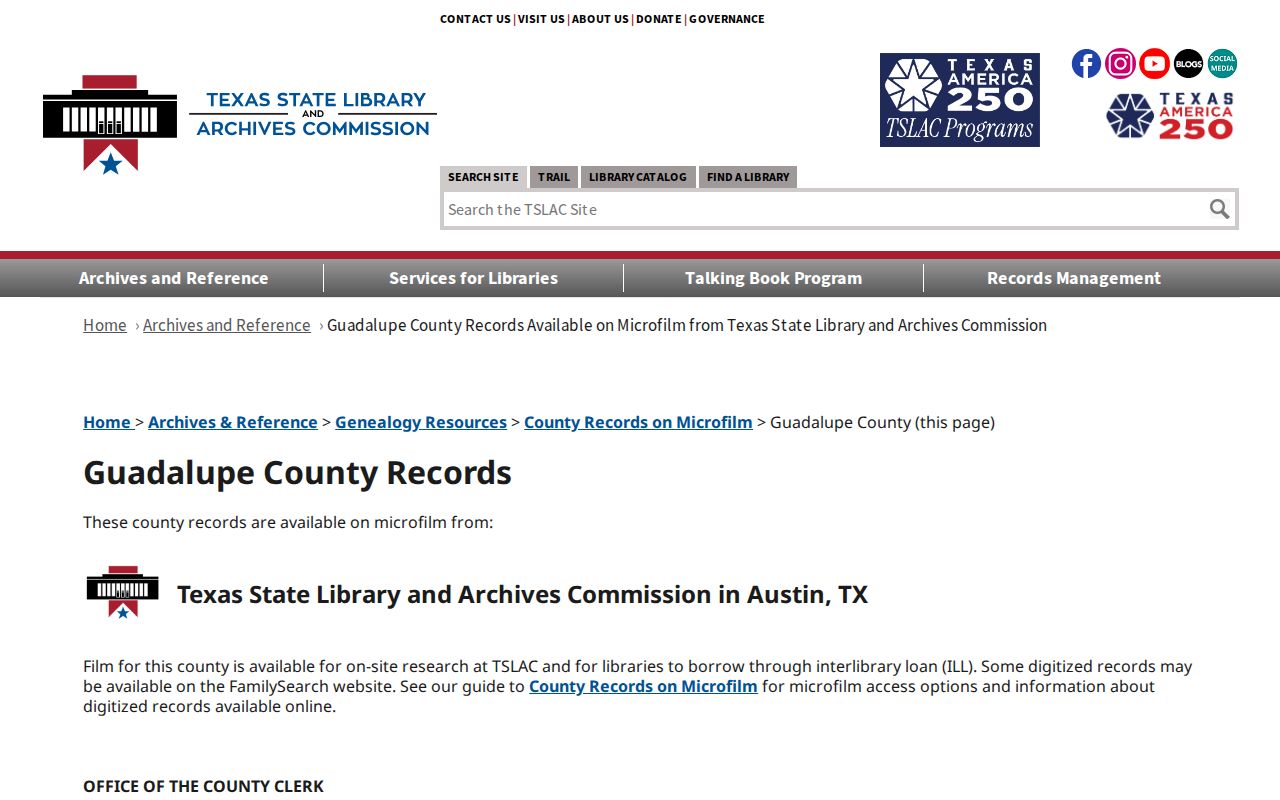
The reel inventory makes it possible to ask for the correct record series instead of a broad, unsupported search for a former household.
Seguin Addresses Need Legal Clues
Seguin Planning and Codes creates 911 addresses inside the city, while GAD appraises property across Guadalupe County. Those systems can describe the same parcel differently from a historic deed or mailing record. Official research did not identify a citywide renumbering or street-renaming year, so none should be assumed. It also did not establish a full public list of historic Seguin Sanborn editions.
Bridge a possible address change with older street-name variants, nearby cross streets, subdivision name, lot and block, abstract, and the deed legal description. The City has a public map application through its Maps and Addressing resources, and the state map catalog includes a Street Map of Seguin. These are comparison aids, not replacements for a deed description.
Seguin's records geography adds another check. The city assigns its 911 addresses, but GAD serves property across Guadalupe County jurisdictions and a parcel may have a Seguin postal address without sharing every city record pathway. A historic downtown lot, newer subdivision, county pocket, and unincorporated delivery area can all require different supporting records. Match the identifier used by the custodian, whether it is a Property ID, Geographic ID, plat reference, or legal description, before carrying an address backward.
Seguin Census and Directory Households
Ownership is only part of an address history. Released federal census schedules from 1850 through 1950 can show household composition, ages, relationships, and changing geographic context. The library holds Texas census microfilm and genealogy resources. City directories can sometimes connect an address to an occupant, but only the 1982 and 1985 Seguin TSLAC holdings are explicitly verified, and no local criss-cross series was confirmed in the inspected sources.
Use a simple household flow: address and legal description to parcel, parcel to deed owner, newspaper or directory lead to a name, then census to household context. Search surname variants, initials, German or Spanish spellings, and married-name forms. The Seguin directory book has the collection-specific access limits and entry-verification steps.
A listed address can reflect an owner, a business connection, or another reported resident. Keep a note of which record supplied each name and date instead of merging them into one unsupported resident list.
Seguin Sanborns Date Buildings
Sanborn fire-insurance maps can show a building footprint, use, construction material, streets, lots, and neighborhood development. They date the physical setting, not the resident. The Seguin Public Library confirms local Sanborn reels, while the Library of Congress catalog can be searched for a city, edition date, sheet count, notes, and digitized-file links.
The exact Seguin edition years were not located in accessible official source text. Search the Library of Congress Sanborn guide and inspect the library inventory before stating a map year or treating a street label as exact. Pair a map with deeds and newspapers to test continuity.
Note: A building's appearance on a map is evidence about the structure, not a record of who lived inside it.
Seguin Newspapers and Probate Endpoints
Local newspapers can close a move, sale, death, school, church, or community trail. The Seguin Mercury begins in 1858, and later Enterprise, Gazette, Gazette-Bulletin, Citizen, and German-language Zeitung material survives in uneven microfilm runs. Check the library's title-change guidance because some reels are mislabeled, and use adjacent titles or dates when a search fails.
Probate is another endpoint. TSLAC lists Guadalupe probate minutes from 1846 through 1931 and probate records from 1846 through 1894. These files may identify heirs, administrators, property, or a subsequent legal-description owner. They establish estate activity, not necessarily a household's full residence history. Together, newspaper and probate leads can explain a transition that a deed chain alone leaves open.
Keep dates with every result. A newspaper notice before a recorded transfer cannot prove a later owner's presence, and an estate filing may follow a move or death by months. The strongest conclusion comes from several records that identify the same parcel and place the person there during the same period.