
Seguin City Directory Collections
Only two Seguin city-directory holdings are explicitly listed in the Texas State Library and Archives Commission, or TSLAC, statewide list: 1982 and 1985. That is useful evidence, but it is not a complete publisher or year run. The Seguin Public Library catalog, the University of North Texas collection, the UT Briscoe Center, and licensed databases are separate places to check for a needed volume. Treat catalog results as leads and confirm the title page and year before attaching a person to an address.
| Collection | Years | Where Held | Access |
|---|---|---|---|
| Seguin city-directory holdings | 1982 and 1985 documented | TSLAC Reference Reading Room | On-site research; TSLAC does not perform phone searches, transcriptions, or email scans. |
| Texas digitized directories | Varies by item | University of North Texas Portal to Texas History | Online collection search by place and period. |
| Local-history and donated material | No complete city-directory run documented | Seguin Public Library catalog and Local History Room | Catalog check, in-library use, and staff assistance. |
| Telephone and regional directories | Varies by repository | UT Briscoe Center and other research libraries | Catalog or collection inquiry before travel. |
The UNT city-directory collection is a practical online starting point for wider Texas searching.
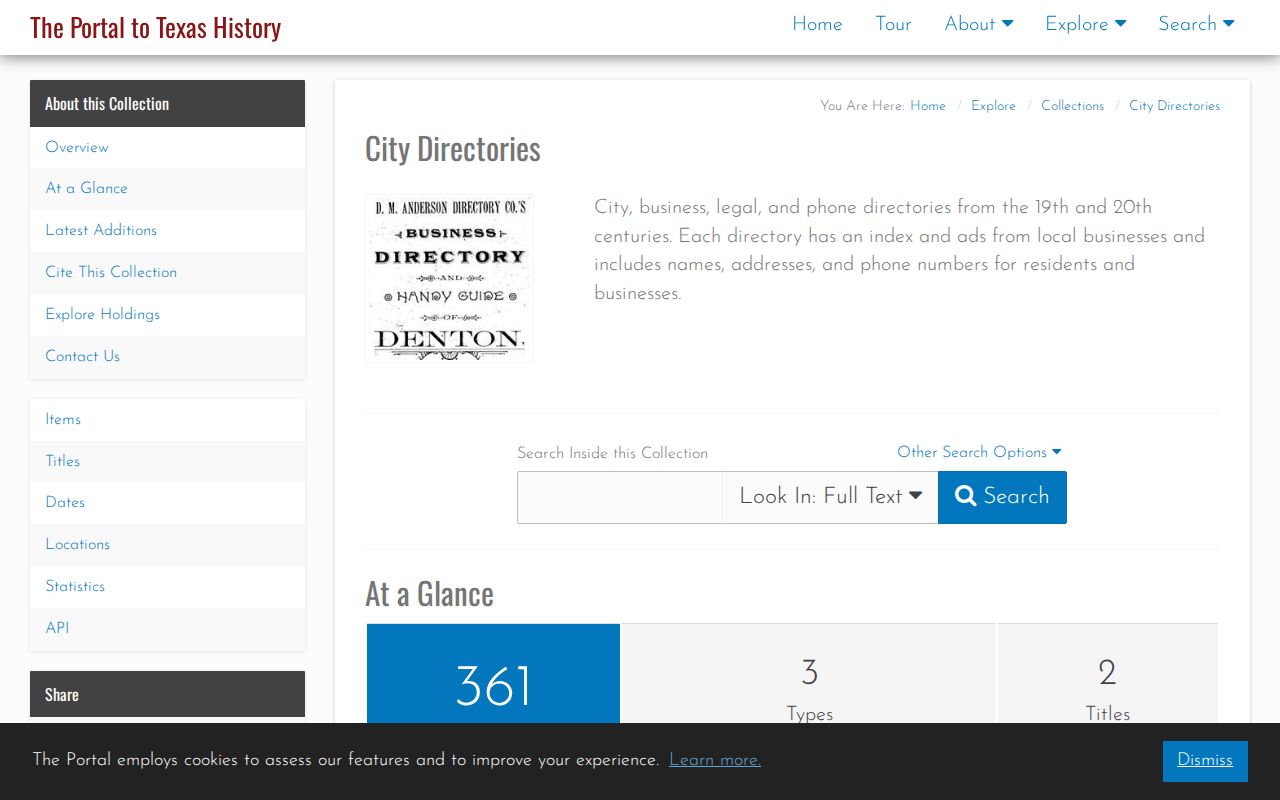
Its indexed-name, address, phone, and browse controls can help identify a related Texas directory, but a search result does not establish that a complete Seguin sequence exists.
Note: The confirmed Seguin holdings establish access points, not a continuous record of every household or every year.
Seguin City Directory Years
The TSLAC city-directory holdings list is the clearest source for the 1982 and 1985 Seguin entries. It should be read as an inventory, not as a promise of a matching earlier or later edition. State guidance names common commercial publishers such as Polk and John F. Worley, yet the inspected sources do not confirm a complete Seguin Polk or Worley run. A title page in the actual volume is the right place to verify publisher, scope, and local coverage.
TSLAC's directory-research guidance also points researchers toward UNT, the Briscoe Center, WorldCat, and library databases. Use the library catalog first when an exact year matters. A catalog record can show whether a volume is on a shelf, off-site, or part of a database with access limits.
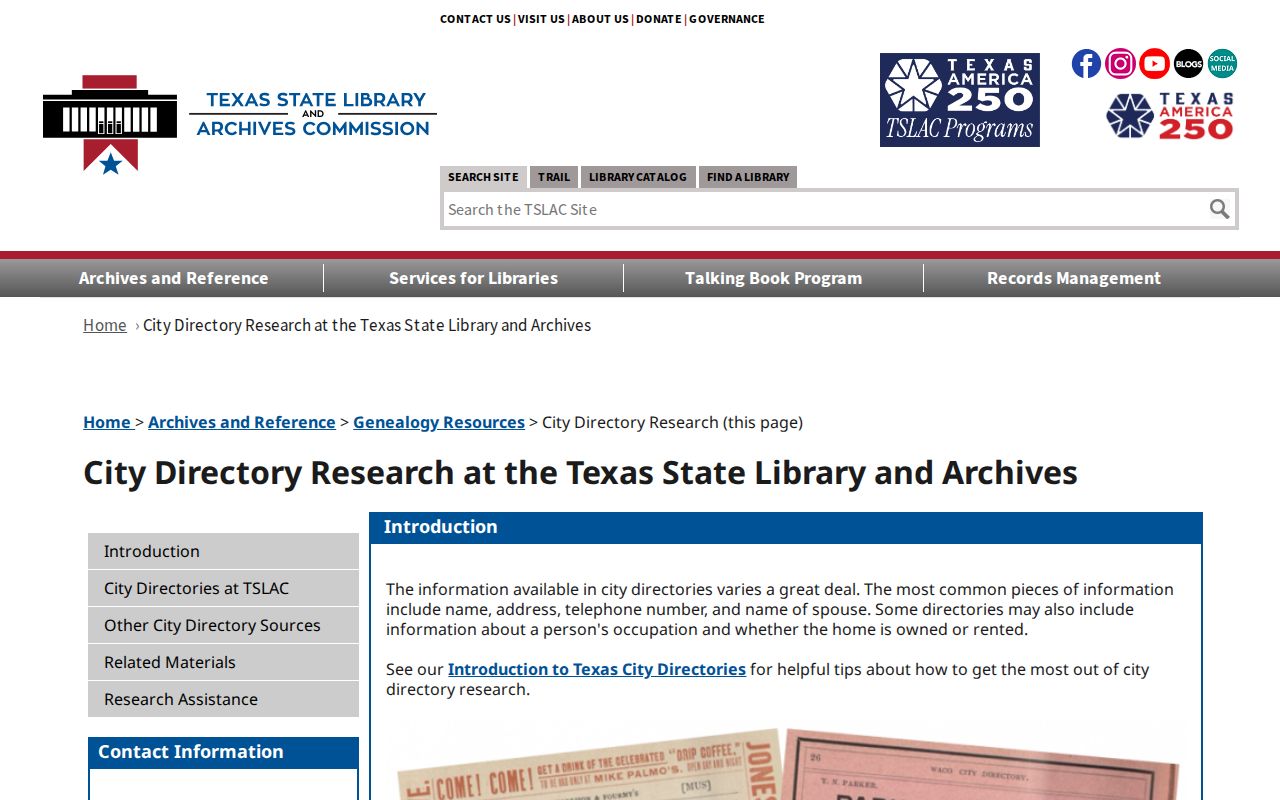
The state guidance is especially important because TSLAC's staff do not search a directory by phone or transcribe an entry remotely.
Seguin Directory Room Access
The Seguin Public Library Local History Room is on the second floor at 313 W. Nolte Street. It has a microfilm machine, a genealogy computer, local newspapers, census and Sanborn reels, yearbooks, and staff assistance during operating hours. The library does not describe a dedicated house-history service or a complete city-directory shelf. Its value is the fallback chain when an online search or a state inventory does not settle a name.
Bring the surname in more than one form, a date range, and any known address. Early records may use initials, middle names, honorifics, German or Spanish spellings, or a married woman's name under her husband's name. Staff can help locate the right reel or catalog entry, while the researcher still needs to compare dates and identities.
The library's Local History Resources listing shows the in-library collections and research equipment.
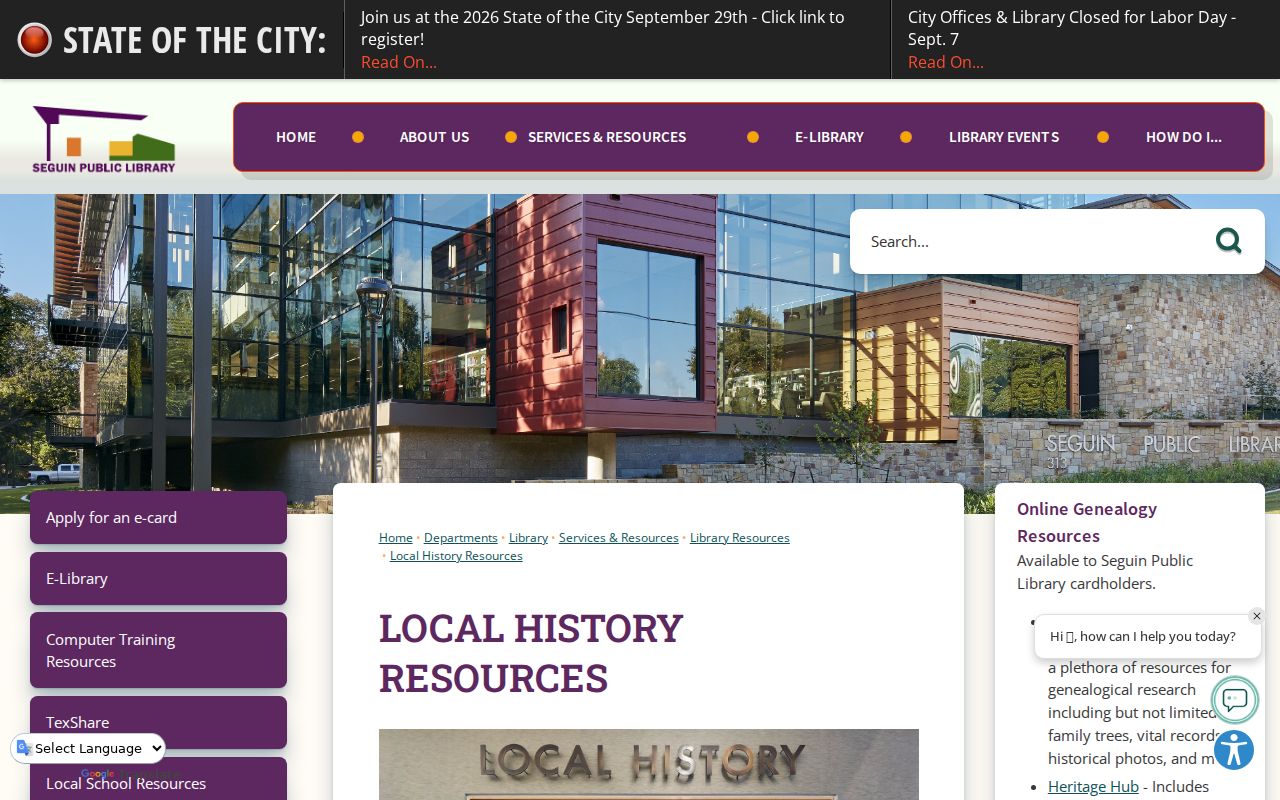
The room supports a directory search with the newspaper and census material needed to test whether a similar name is the same person.
Access also varies by resource. Ancestry Library Edition is an in-library tool, while selected genealogy and newspaper resources are available through a library card or e-card. The library catalog is the discovery point for donated local-history items and yearbooks. That split makes a library visit useful even after an online directory search, especially when a surname needs to be checked against a newspaper reel, census source, or school publication.
Seguin Directory Gaps in Newspapers
When a city directory is unavailable, the library's newspapers can provide dated notices, deaths, business items, school news, and address clues. The Seguin Mercury begins in 1858, while the Enterprise and Gazette material spans much of the later nineteenth and twentieth centuries in uneven runs. The 2005-current Gazette-Enterprise coverage is also available through NewsBank for eligible library users.
Titles require care. The library warns that rolls labeled Gazette before November 13, 1952 may actually be Gazette-Bulletin. Rolls labeled Gazette-Enterprise after 2011 may instead be Seguin Gazette after the name change. Some donated reels are poor or out of order. Record the title printed on the reel and check adjacent titles before deciding that a notice is absent.
Note: A newspaper mention is dated evidence of an event or association, not a substitute for a verified address record.
Reading Seguin City Directory Clues
No inspected official source exposed an actual Seguin entry from the 1982 or 1985 volumes. That means common directory fields must not be treated as confirmed local features. When the volume is in hand, first photograph or transcribe its title page, publisher, abbreviation key, and one full household entry. Then use the inventory below as a checklist of details to verify in that particular Seguin city directory, not a claim about what it contains.
| Alphabetical name listing | Check whether names appear in the edition and how initials, spouses, or businesses are styled. |
|---|---|
| Street or address section | Confirm whether the volume has a street-order listing before using it for an address search. |
| Personal notation | Record a spouse, business, or other detail only if the local entry actually prints it. |
| Owner or widow marks | Verify the symbol and its definition in the edition's key before drawing a conclusion. |
- Criss-cross directory
- A directory arranged by street and number rather than surname. A Seguin criss-cross series was not confirmed in the inspected sources.
- Householder index
- An alphabetical listing that may identify the principal person at an address. Its presence and local wording must be checked in the volume.
- Abbreviation key
- The publisher's explanation of shortened labels and symbols, usually found in the front matter. Copy it before interpreting an entry.
Seguin Yearbooks for Family Clues
For former classmates, relatives, and community history, yearbooks can fill a gap between a directory year and a census. The Local History Room lists El Toreador, El Toro, Navarro school titles, The Matador, PEDAGOG, and Texas Lutheran University's The Growl among its holdings. The donations are incomplete, so a catalog search for the desired year is necessary. These books may preserve names, activities, and photographs, but they do not confirm a current address.
The Seguin-Guadalupe County Heritage Museum is another local route for artifacts, photographs, and historic-place context. It has an archivist and curator contact but no published searchable resident index. Ask for a collection lead tied to a date, school, organization, or neighborhood instead of expecting a name-search database.
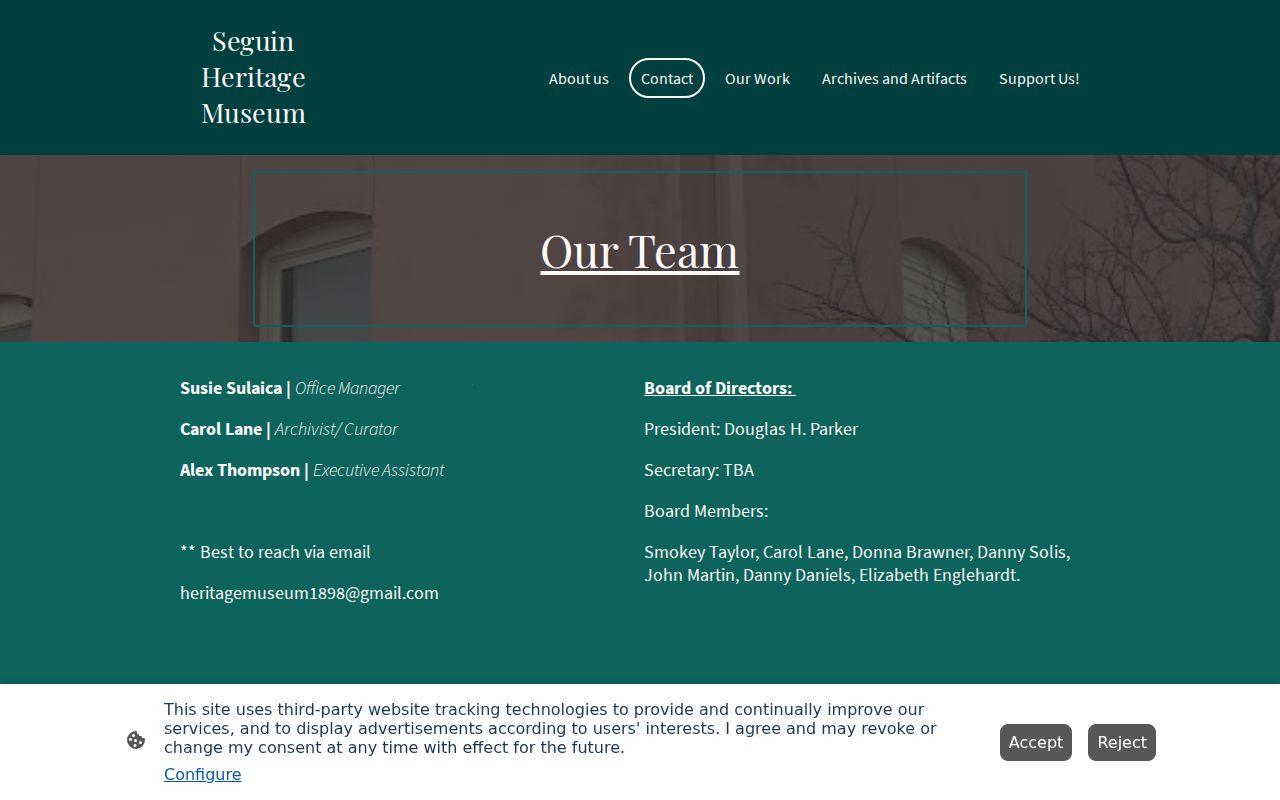
Museum material works best as context for a documented directory, newspaper, or school record rather than as a stand-alone household list.
Seguin Records Beyond Directories
County records can close gaps when no city directory survives. TSLAC's Guadalupe County holdings include tax rolls from 1846 through 1910, deed volumes from 1846 through 1902, probate minutes from 1846 through 1931, marriage records, naturalization material, surveys, and scholastic census reels. Tax rolls can show a taxpayer's presence or departure, although they do not prove family relationships. Probate can identify heirs and property interests after a death.
The TSLAC Guadalupe County microfilm guide gives reel-level paths and may support an interlibrary-loan route where available. Deeds identify recorded interests, while directory-like sources are better suited to occupants. Keep those roles separate when building a family or address history.
Those archival series provide a documented alternative when a city-directory volume, local year, or sample entry cannot be located.
Note: Guadalupe material can include older Gonzales County descriptions because the county's early boundaries and records developed from that earlier area.
Tracing Seguin City Directory Households
Start with the strongest known identifier, such as a full name, spouse, likely address, school, or neighborhood. Search surname variants and initials in the 1982 or 1985 volume when access is available. If a street section is verified in that edition, check it separately because an address can hold more than one adult or a business. The separate previous residents search follows the deed and address trail when a household lead needs property context.
- Verify the exact year, title, publisher, and abbreviation key before copying a directory result.
- Record the name exactly as printed, then note address and any local details the volume actually shows.
- Compare the result with released federal census schedules for 1900, 1910, 1920, 1930, 1940, or 1950 when the time period fits.
- Use newspaper microfilm to test a move, marriage, death, school link, or business connection.
- Check deed, tax, or probate records only for the question each series can answer.
A disappearing entry can mean a move, death, an unlisted household, an indexing difference, a gap in publication, or a place outside the covered area. Census age, address, and family structure help separate people who share a name.
Seguin Record-Keeping Timeline
Seguin's history adds useful context to older local names. Walnut Springs was laid out in 1838 and renamed Seguin in 1839. Guadalupe County was re-established in 1846, and its surviving recorded series reach into that period. A location may therefore appear under older county or land-description language even when the modern search starts with Seguin.
- 1838-1839: Walnut Springs is laid out and renamed Seguin.
- 1846: Guadalupe County is re-established; deed, tax, marriage, and probate series begin in the documented county-era holdings.
- 1858 onward: Seguin Mercury and later newspaper titles add a dated local-name trail.
- 1982 and 1985: TSLAC explicitly lists these two Seguin city-directory holdings.
No verified official courthouse-fire or flood narrative was found for a local records loss. A gap in a directory or newspaper run should be described as a gap, not assigned an invented cause.